-
PROVIDERS
Learn more
Join Tempus at the 2026 ASCO® Annual Meeting!
-
LIFE SCIENCES
REGISTER NOW
From insight to impact: Leveraging the AI-enabled Next platform with BMS to advance equitable access in precision oncology
-
PATIENTS
It's About Time
View the Tempus vision.
- RESOURCES
-
ABOUT US
View Job Postings
We’re looking for people who can change the world.
- INVESTORS
01/13/2026
Q&A: Implementing successful decentralized oncology trials
In a recent webinar hosted by Tempus, leaders from academic and community oncology practices gathered to discuss the successful implementation of decentralized clinical trials (DCTs) and how the TIME Network contributes.
Authors
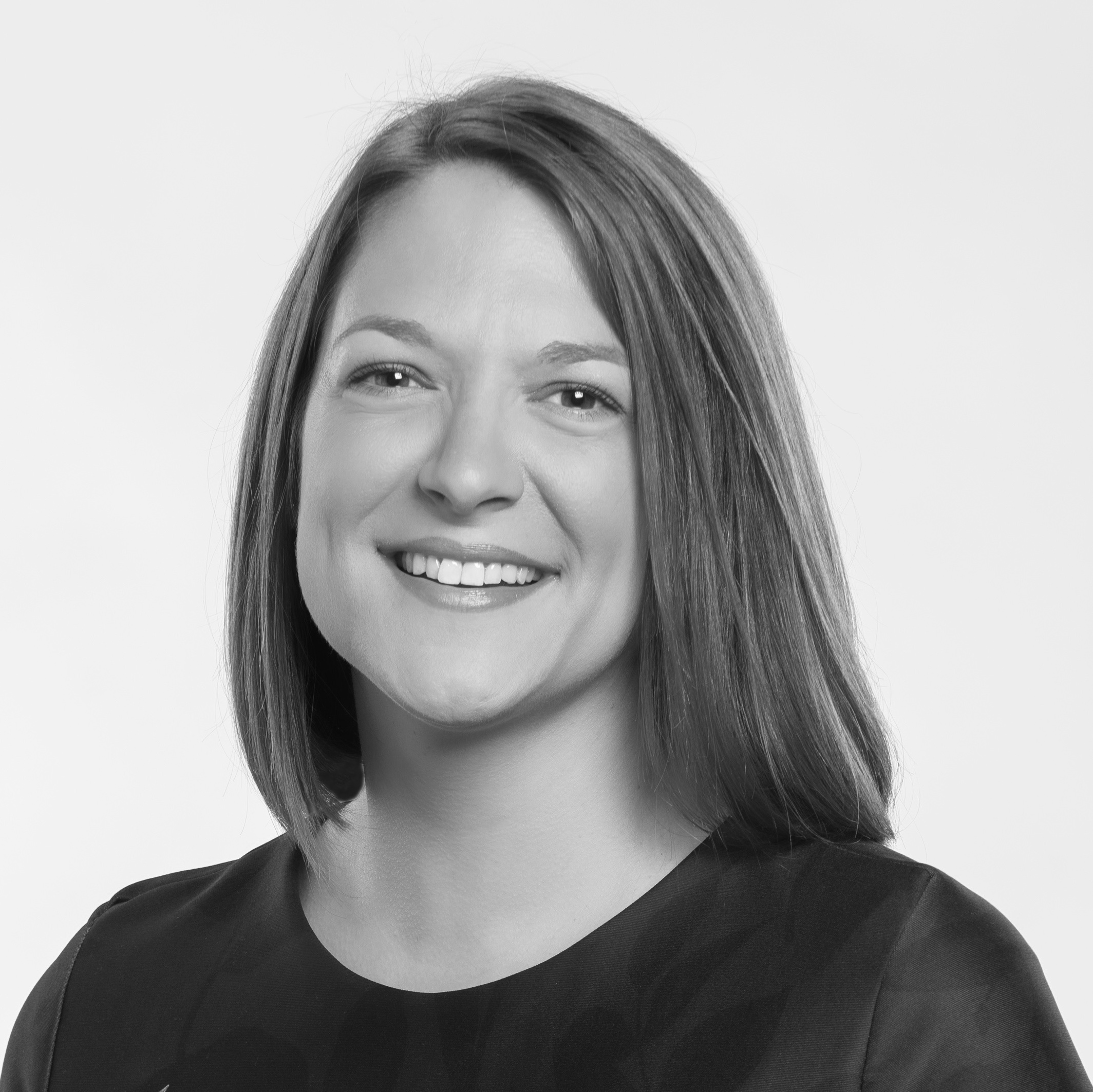
Jessica Bivins, MPH
VP, Clinical Research, OneOncology
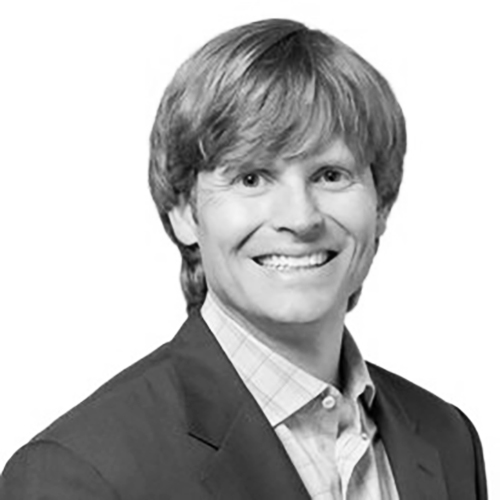
Scott Paulson, MD
Director of Clinical Research, Texas Oncology
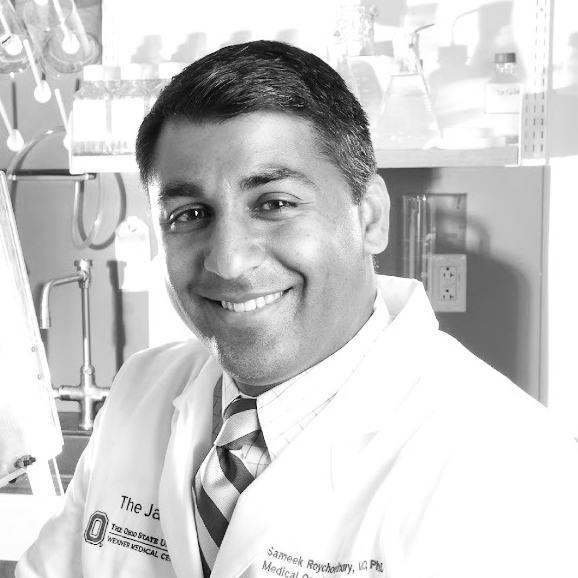
Sameek Roychowdhury, MD, PhD
Professor, The Ohio State University
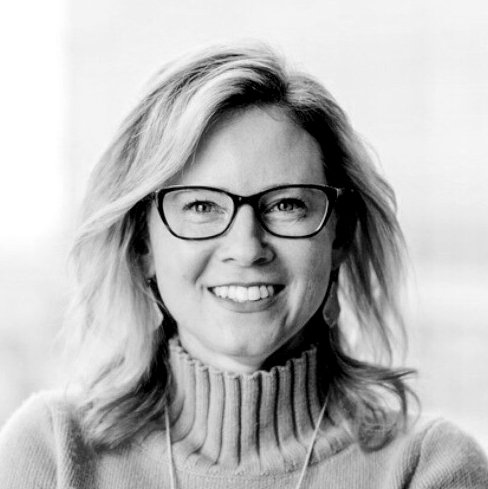
Noelle Gaskill, MBA, ACRP-CP
VP, General Manager, TIME Network, Tempus
VP, Clinical Research, OneOncology
Scott Paulson, MD
Director of Clinical Research, Texas Oncology
Sameek Roychowdhury, MD, PhD
Professor, The Ohio State University
Noelle Gaskill, MBA, ACRP-CP
VP, General Manager, TIME Network, Tempus
While the industry has long promised that DCTs can help reduce burdens on patients and sites, widespread adoption in oncology has been slow. This session explored the practical “how” of making DCT models work, paired with the data and technology of TIME.
The panel featured Noelle Gaskill, VP and GM of the TIME Network at Tempus, who moderated the discussion. She was joined by Jessica Bivins, MPH, VP of Research at OneOncology; Scott Paulson, MD, Director of Clinical Research at Texas Oncology; and Sameek Roychowdhury, MD, PhD, a professor and principal investigator at The Ohio State University. The conversation centered on the innovative DCT models these organizations have built, the challenges they have overcome, and the potential impact these trials may have on patient access and participation.
Why haven’t decentralized trials become more common in oncology, despite their promise? |
Dr. Scott Paulson: The shift began during the COVID-19 pandemic when the FDA relaxed certain guidelines, but long-term adoption has been slow for a few key reasons. First, clinical trial assets are valuable, and sponsors are often hesitant to be the first to try a new model for fear of regulatory pushback.
Second, clinical research sites are already stretched thin. Introducing a new DCT model disrupts highly efficient, established workflows, which is difficult for overworked teams to manage. For a DCT to succeed, all stakeholders—the site, the sponsor, and the CRO—must be aligned. Historically, lack of alignment has been a major barrier to moving toward more patient-centered research. |
How are your oncology practices successfully implementing different DCT models today? |
Dr. Scott Paulson: At Texas Oncology, we consolidated our research operations from nearly 60 independent sites to six main hubs, each with about 10 satellite locations. This hub-and-spoke model allows us to centralize principal investigator (PI) expertise. We use different variations of this model depending on the trial. For trials targeting exceptionally rare mutations, like NRG1 fusions, we use a single-site model to cover the entire state, ensuring we don’t miss any eligible patients. For riskier therapies like bispecifics, we use a more diffuse model with multiple hubs that can administer the drug, with follow-up care happening at local satellite sites. This allows us to protect PI time while enabling sub-investigators at remote locations to deliver care with central support.
Jessica Bivins, MPH: At OneOncology, our goal is to centralize as much as possible across our network of 16 practices to reduce the burden on site staff and patients. We started our DCT model with prospective real-world evidence (RWE) and Phase 4 studies, which are less operationally complex. Our central network team manages the entire process: we use our internal data warehouse for pre-screening, deploy eConsent to enroll patients from any of our practices, and have a central team for data entry. This frees up our individual practices to focus on more complex interventional trials. The primary operational burden on the local site is communicating with the patient that our central team will be in contact.Dr. Sameek Roychowdhury: We launched a fully national, decentralized trial for pancreatic cancer patients with a rare FGFR mutation. The Ohio State University is the only site, and we partner with patients and their local oncologists anywhere in the U.S. All research-specific activities, including consenting, eligibility, and drug shipment, are managed by our team. Standard-of-care procedures like blood tests and scans are done locally, with the results sent to us for review. This model is critical for a target found in only 1% of pancreatic cancer patients—a trial like this likely wouldn’t happen otherwise. It opens the door to precision oncology for rare subsets and allows patients to stay with their trusted local doctor while accessing a cutting-edge trial. |
How do you ensure proper PI oversight in a decentralized model and address sponsor concerns about risk? |
Dr. Scott Paulson: We ensure oversight through regular regulatory meetings and by having the PI meet with every patient via telemedicine. The PI is responsible for all regulatory components, while the sub-investigators focus on delivering care. This model helps de-risk the trial. An expert PI who knows a drug’s specific toxicities and sees many patients is better equipped to manage care than 20 different PIs who may have only seen one patient with that profile. It is better to have one PI with 20 patients under their wing than 20 PIs with one patient.
Dr. Sameek Roychowdhury: We proved during COVID that we can safely manage patients on toxic therapies via telehealth. The local oncologists we partner with are often grateful for our involvement because they may have never seen a patient with a specific rare mutation before. Our expertise provides a safety net. The perception of risk is one of the biggest barriers for sponsors, but once you do it and prove it’s safe and feasible, it becomes possible. |
What is the real-world impact of these models on patients? |
Dr. Scott Paulson: When the model is aligned, the impact is huge. We had a patient with advanced colorectal cancer who lived eight hours from the nearest trial site. We identified a KRAS G12C mutation and enrolled them in a local DCT study within a week and a half. This saved them from having to travel for a randomized trial where they might have ended up on the standard-of-care arm anyway. It’s a massive improvement in patient satisfaction and access.
Dr. Sameek Roychowdhury: The biggest advantages for patients are that they can keep their trusted local doctor and avoid the burden of travel, which can be costly and disruptive. Our first patient on the pancreatic cancer trial has had a partial response while remaining at home. We are providing access to a trial that would have been out of reach for them otherwise. |
What types of studies are best suited for a decentralized approach? |
Dr. Scott Paulson: The low-hanging fruit includes trials with oral drugs that have a well-understood safety profile, or randomized trials where one arm is the standard of care. Decentralized models may be adapted for a range of therapies, including complex approaches, depending on trial requirements and site capabilities. Even complex therapies like CAR-T and bispecifics can be managed with a hub-and-spoke model.
Dr. Sameek Roychowdhury: DCTs are especially critical for rare cancers and rare subsets of common cancers. Many discoveries for targets affecting only 1-2% of a patient population are left on the shelf because a traditional trial isn’t feasible. A nationwide decentralized approach can open doors for these patients and allow us to translate those discoveries into new therapies. |
How does the Tempus TIME Network support and scale these DCT models? |
|
Jessica Bivins, MPH: Getting sponsor buy-in is a major challenge. Having a group like the TIME Network that brings together sponsors and a network of sites ready to operationalize DCT models takes a lot of work off our plates. Just as Tempus figured out how to enable the just-in-time trial activation model, they can help standardize and scale DCTs.
Noelle Gaskill, MBA, ACRP-CP: That’s exactly our role. The TIME Network acts as a bridge between our innovative sites and sponsors. The network utilizes standardized contracts, budgets, and templates that help make sponsors and CROs comfortable. We can assist with activating a hub-and-spoke model quickly and, by layering in our AI-enabled patient matching capabilities, we can identify potentially eligible patients for these trials, even in remote locations beyond the walls of the main research site. This combination of standardized administrative requirements that assist with rapid site activation and precision patient identification supports our network sites in growing their research programs, facilitating broader trial access for patients, and improving site operations. |
Please note that the content in this document has been revised for clarity and conciseness. Some language and formatting may have been adjusted to enhance readability while preserving the original meaning and intent of the discussion.
| To gain comprehensive insights into Tempus’ role in advancing precision medicine, we invite you to watch the webinar recording. For in-depth demonstrations of our AI-enabled applications, contact us here. |
-
 04/02/2026
Unlocking foundation models: Our experience from proof of concept to deployment at scale
An executive discussion on leveraging multi-modal foundation models to accelerate your drug development journey
Watch replay -
 03/04/2026
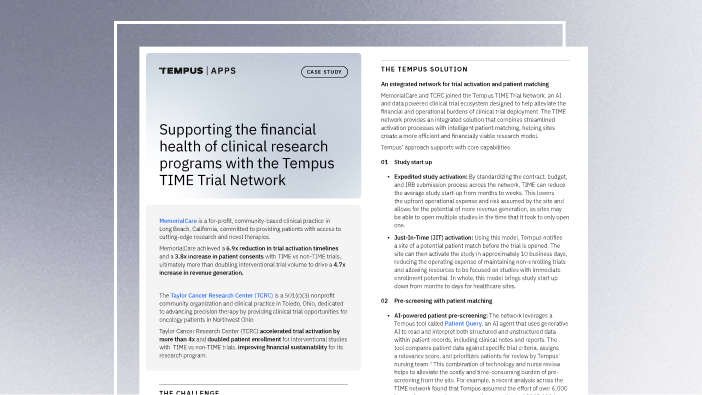
Supporting the financial health of clinical research programs with the Tempus TIME Trial Network
By combining the power of AI-driven technology with a streamlined operational model, Tempus provides the infrastructure and support to enable sites with limited resources to participate in research and expand their capabilities.
Read more -
 01/20/2026
From image to insight: How Tempus is leveraging AI to advance biomarker screening at scale
By leveraging Paige Predict to screen for genomic and phenotypic biomarkers, clinicians and researchers have rapid access to valuable information to prioritize testing and pre-screen patients at scale.
Read more