-
PROVIDERS
REGISTER NOW
Upcoming Webinar:
MRD data insights across the cancer care continuum -
LIFE SCIENCES
REGISTER NOW
From insight to impact: Leveraging the AI-enabled Next platform with BMS to advance equitable access in precision oncology
-
PATIENTS
It's About Time
View the Tempus vision.
- RESOURCES
-
ABOUT US
View Job Postings
We’re looking for people who can change the world.
- INVESTORS
04/27/2026
How biotechs can build a data-driven R&D strategy
In a recent webinar, leaders from Whitehawk Therapeutics and Tempus explored how biotechs can leverage multimodal data to accelerate R&D and de-risk programs.
Authors
Phil Perez
Senior Vice President, Commercial Life Sciences, Tempus
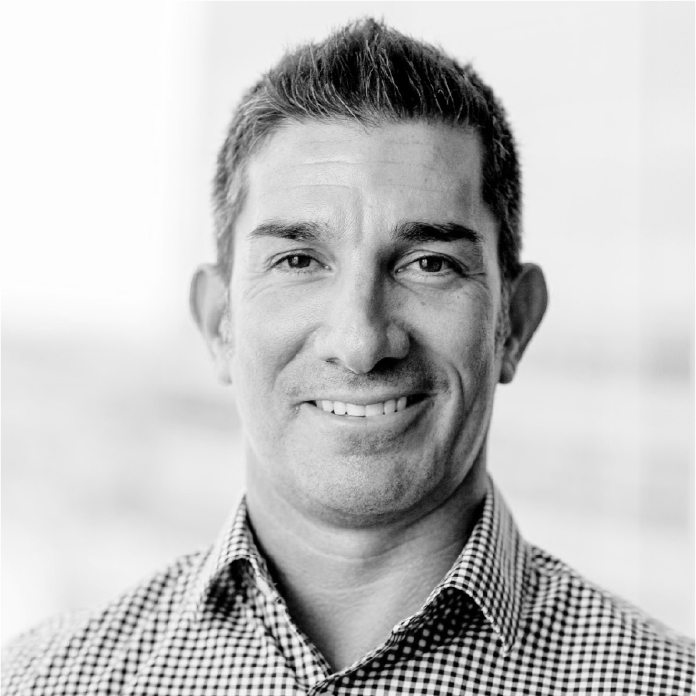
Martin Bontrager, PhD
Senior Director, Translational Research, Tempus
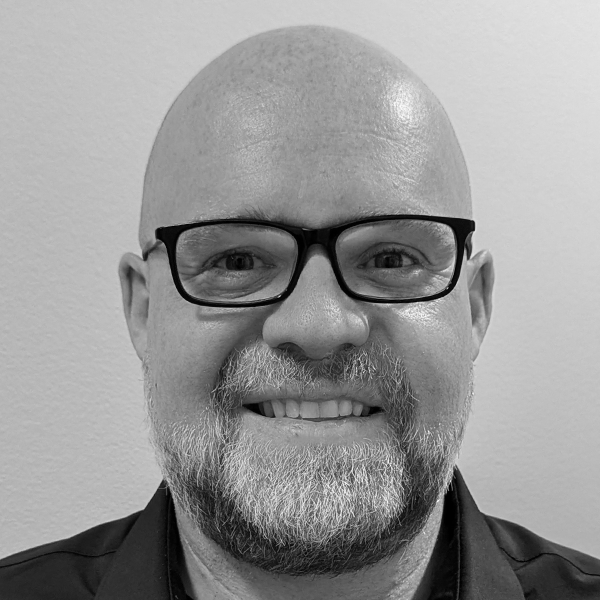
Dave Lennon, PhD
President & Chief Executive Officer, Whitehawk Therapeutics
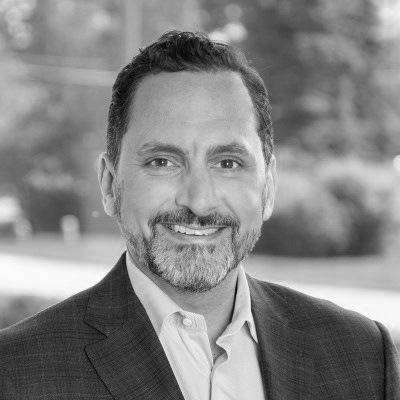
Senior Vice President, Commercial Life Sciences, Tempus
Martin Bontrager, PhD
Senior Director, Translational Research, Tempus
Dave Lennon, PhD
President & Chief Executive Officer, Whitehawk Therapeutics
In today’s competitive landscape, it is one thing to have a promising biological hypothesis; it is another challenge entirely to build a strategy that can de-risk an asset and accelerate its path to the clinic, especially in fast-moving fields like antibody-drug conjugates (ADCs).
Dave Lennon, PhD, CEO, Whitehawk Therapeutics, and Martin Bontrager, PhD, Vice President of Translational Research, Tempus, joined Phil Perez, Senior Vice President, Commercial Life Sciences, Tempus, as they explored the practical hurdles in bridging scientific ideas with actionable development plans, a critical challenge for biotechs.
Perez: What is the biggest gap between a scientific idea and an actionable R&D plan, especially for engineered therapeutics like ADCs? |
Lennon, PhD: We are at an interesting point where we have moved beyond traditional discovery into an era of “engineered therapeutics.” With ADCs, for example, we can create thousands of combinations of antibodies and chemotherapy payloads. The challenge is that engineers like to build, and you can build these molecules ad nauseam. The gap is moving from building something because you can to knowing what you should build.
The traditional discovery process had a rigorous, mechanistic understanding. With engineered therapeutics, you can create countless hypotheses, but you need a data-driven strategy to sort through the options. Otherwise, you are just building it and hoping patients will come. We need to bridge that gap to ensure that if we build it, we have the data to know they will come. |
Perez: How does integrating multimodal data, like genomics and transcriptomics, help biotechs make critical R&D decisions with more confidence? |
Lennon, PhD: It changes the entire calculus. In the ADC field, you can have the most advanced, cutting-edge bioengineering, but then you are asked where the target is expressed. The answer often comes from immunohistochemistry (IHC) on a few dozen patients, where a pathologist is counting stained cells. It feels like using stone tools to guide a spaceship. You are making multi-million dollar decisions based on highly subjective, small-scale data. Integrating large-scale, multi-omic data gives you a much richer foundation. You can move from a sample of 50 patients to analyzing expression across 115,000 lung cancer patients. This allows you to understand expression over a distribution curve, across different subtypes, and through disease progression. It helps build confidence in your strategic choices and de-risks the program by ensuring you can actually find and recruit the patients you need for a trial.
Bontrager, PhD: From our perspective, the goal is to work closely with partners to identify the right strategies using real-world data. Tempus has a unique library of multimodal data, including sequenced DNA and RNA, linked to structured clinical information like treatments, outcomes, and lab values. This allows us to narrow down to the right patient population and the right set of molecular and clinical conditions. We can iterate on hypotheses to identify the patient population that is most likely to respond to a drug, which helps position the asset for success. |
Perez: RNA sequencing provides a dynamic view of tumor biology, but what are the challenges in using it at scale, and how does Tempus address them? |
Bontrager, PhD: RNA is dynamic, and its expression can fluctuate. A key challenge is managing technical variability that can obscure the underlying biology. At Tempus, we address this in a few ways. First, our RNA sequencing is performed consistently in the same lab with the same machines and strict quality control, which minimizes technical batch effects. This allows us to focus on the real biology.
Second is volume. With over 300,000 patients in our library with RNA sequencing data, we can overcome the noise you might see in a small sample of 35 patients. When you are looking at 75,000 lung adenocarcinoma records, for example, you can control for covariates like tumor purity or tissue of origin and truly understand the molecular landscape. This scale allows us to hone in on specific biomarkers and targets of interest with much greater confidence. |
Perez: Can you share a real-world example of how data-driven insights de-risked a program or accelerated a timeline? |
Lennon, PhD: We have a couple of examples. In a previous role, we were running a trial for a rare mutation. Screening was slow because we had to test many patients to find one positive. We worked with Tempus to set up a system that alerted us to positive patients at sites that were not traditional trial sites. We could then rapidly activate those sites, which cut our recruitment timeline from a projected three years down to 18 months.
More recently at Whitehawk, we knew our first ADC target was expressed in non-small cell lung cancer and ovarian cancer. Our analysis with Tempus revealed that endometrial cancer was another highly expressed tumor type. While we did not have prior validating data for that indication, the strength of the expression data gave us the confidence to include it in our Phase 1 trial, creating a robust new opportunity for the program. |
|
“For us, [the partnership’s] been ten times the investment in terms of speed, confidence, and our ability to tell our story effectively in a very competitive marketplace.“ – Dave Lennon, CEO, Whitehawk Therapeutics |
Perez: Beyond the science, how does having a data-driven validation package impact conversations with key stakeholders like investors, regulators, and KOLs? |
Lennon, PhD: It changes the dynamic completely. With investors, you come to the table with a more robust data set that builds confidence. With regulators, you can use the data to have a more informed discussion about unmet needs and indication selection.
One of the biggest benefits for us has been engaging the investigator community. As a small biotech, we cannot offer large grants, but we can offer new insights. We have partnered with key opinion leaders to discuss hypotheses coming off the data. For example, an analysis of overall survival relative to target expression was incredibly impactful for their thinking. These robust discussions have helped us refine our clinical program and build strong relationships with top researchers in the field. |
Perez: As a pre-revenue biotech, how do you justify the investment in real-world data to a board of directors? |
| Lennon, PhD: I never try to justify any single component of a program by its individual ROI. A successful strategy is enabled by multiple investments working together. When you have a high monthly burn rate, saving even one month on a timeline is worth millions. The investment in real-world evidence pays off if you commit to using it to gain speed, confidence, and a competitive edge. For us, it’s been ten times the investment in terms of speed, confidence, and our ability to tell our story effectively in a very competitive marketplace. |
Perez: Looking ahead, what is the biggest evolution you expect in how the industry uses data to drive R&D decisions? |
Lennon, PhD: I think we will see a massive acceleration in the development cycle for engineered therapeutics. The traditional discovery process is linear. Now, with large datasets and AI, we can run experiments synthetically. In the ADC field, we are already seeing companies learn from Phase 1 data and immediately start designing the next generation of molecules that leapfrog the current ones. This concept of technology stacking and rapid iteration, borrowed from the tech world, will allow us to go back and redesign programs in months instead of years.
Bontrager, PhD: I agree that speed is king. I see the future centered on AI agents that can help accelerate analysis. Today, you ask a question, and a technical expert spends days or weeks coding an analysis. We are entering a world where those questions can be answered in minutes or hours. AI-based workflows will allow us to not only answer questions faster but also to generate and iterate on new hypotheses, sorting through complex, multimodal data to surface the right answers to guide development programs. |
Note: Content edited for clarity and conciseness. Some language and formatting may have been adjusted to enhance readability while preserving the original meaning and intent of the discussion.
|
To gain comprehensive insights into Tempus’ role in advancing precision medicine, we invite you to watch the webinar recording or read more about how we are building an integrated engine for discovery and validation. For in-depth demonstrations of our AI-enabled applications, contact us here.
|
-
 04/21/2026
Tempus Next Pathways unlocked critical insights into the aNSCLC patient journey with Bristol Myers Squibb (BMS)
Discover how BMS collaborated with Tempus to deploy the Next Pathways program across 13 community-based health systems to address care gaps for patients with advanced non-small cell lung cancer (aNSCLC).
Read more -
 04/03/2026
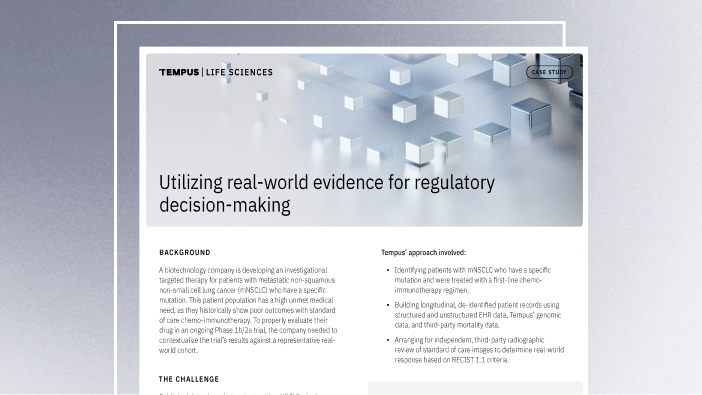
Utilizing real-world external controls for regulatory decision-making
A biotech company needed to contextualize its Phase 1b/2a trial for mNSCLC patients with a specific mutation. Learn how Tempus constructed a real-world external control arm to provide a benchmark for their regulatory submission.
Read more -
 03/24/2026
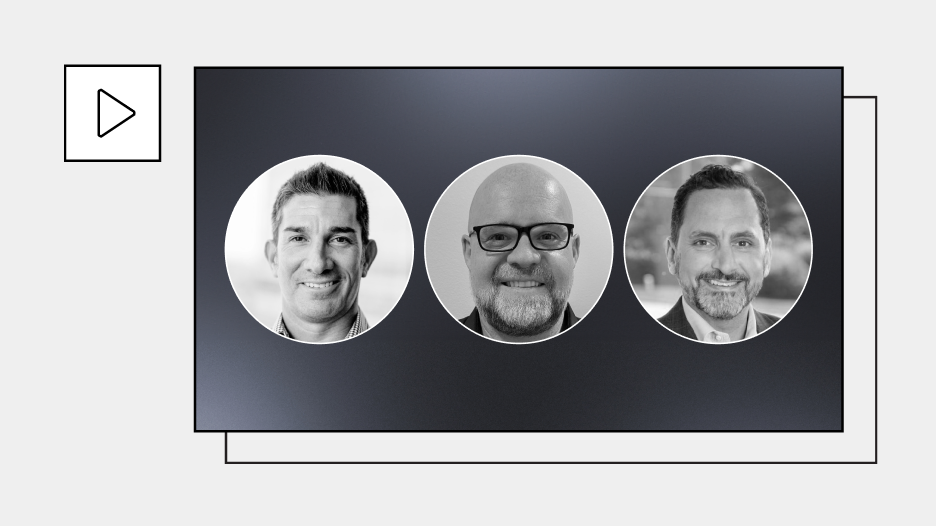
Translating data into an actionable R&D strategy
Hear from industry leaders about how a data-driven understanding of disease biology informs critical decisions and accelerates therapeutic development. Secure your recording now.
Watch replay