-
PROVIDERS
New MRD Medicare Coverage for Select Indications*
*When coverage criteria are met. Additional criteria and exceptions for coverage may apply.
-
LIFE SCIENCES
Read now
Accelerating a phase 1 oncology trial: The TIME Network's impact on patient enrollment
-
PATIENTS
It's About Time
View the Tempus vision.
- RESOURCES
-
ABOUT US
View Job Postings
We’re looking for people who can change the world.
- INVESTORS
12/01/2025
Q&A: Uncovering the uncommon in rare cancers
Dr. Ezra Cohen and Dr. Razelle Kurzrock discuss how diagnostic innovation, AI, and multimodal data are driving change in rare cancer care.
Authors
Dr. Ezra Cohen, MD
Chief Medical Officer, Tempus

Dr. Razelle Kurzrock, MD
Center Associate Director,
Professor of Medicine,
Medical College of Wisconsin
Chief Medical Officer, Tempus
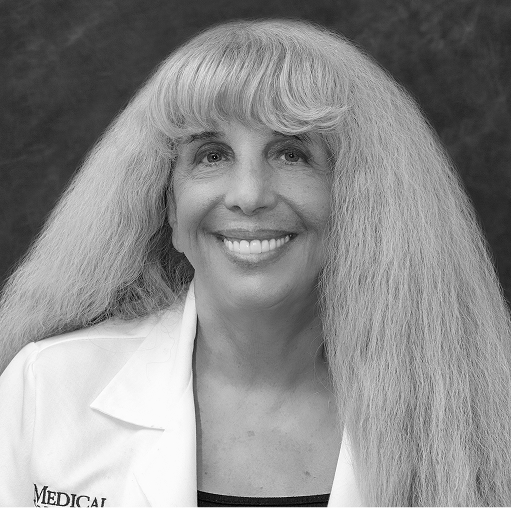
Dr. Razelle Kurzrock, MD
Center Associate Director,
Professor of Medicine,
Medical College of Wisconsin
Introduction
While individual rare cancers are, by definition, uncommon, they collectively account for nearly 25% of all cancer diagnoses.1 These malignancies present unique challenges for patients and clinicians alike, from diagnostic delays to limited treatment options. To explore the evolving landscape of rare cancer care, Tempus hosted a webinar featuring two leading experts in the field.
This webinar, “Uncovering the Uncommon in Rare Cancers: Diagnostic Innovation Driving Change,” brought together Ezra Cohen, MD, Chief Medical Officer of Oncology at Tempus AI , and Razelle Kurzrock, MD, FACP, an internationally recognized leader in precision medicine and rare cancers. They discussed the current challenges of rare cancers, the transformative potential of molecular profiling, and the role of artificial intelligence in accelerating progress. This article synthesizes their key insights into a concise Q&A format.
Watch the recording here.
Q&A |
The core challenge of rare cancer |
Dr. Ezra Cohen: To start, what do you see as the single most important and addressable challenge in rare cancer?
Dr. Razelle Kurzrock: The biggest challenge in rare cancers is making an accurate diagnosis. Pathological diagnosis alone can often be difficult, and even when it’s established, it doesn’t always reveal what’s truly driving the disease. Fundamentally, I believe genomics is the diagnosis, understanding the genomic alterations that define a tumor is key. My own belief is that utilizing genomic profiling for these cancers is perhaps the single most important thing we can do to ensure patients receive both an accurate diagnosis and the most appropriate treatment plan. Ideally, this should be done reflexively on path tissue. |
Redirecting treatment with genomics |
Dr. Ezra Cohen: Have you seen cases where genomics redefines the diagnosis initially determined by the pathologist?
Dr. Razelle Kurzrock: Absolutely. We’ve seen this repeatedly. We find a pathognomonic alteration, often a fusion, and it redirects our thinking about what the cancer is. But more importantly, it redirects our treatment. |
The impact of tumor-agnostic approvals |
Dr. Ezra. Cohen: Traditionally, treatment decisions were based on tumor type or site of origin. How does a genomic information earlier approach change treatment options, especially with the rise of tumor-agnostic approvals?
Dr. Razelle Kurzrock: There are now 9 solid tumor-agnostic approvals by the FDA, and one of the reasons the FDA moved towards this approach is to address the unmet needs of patients with rare cancers. Most are for genomic aberrations. If you don’t know your patient has one of those, you cannot give them an FDA-approved, on-label therapy that is often tremendously active. For rare cancers, where there’s so little data, I think it’s even more critical. |
The role of industry partnerships |
Dr. Ezra Cohen: You’ve highlighted data scarcity as a major challenge. How important are partnerships with industry to leverage large-scale, multimodal data to overcome this?
Dr. Razelle Kurzrock: There is almost unimaginable value in this. This is true for all cancers, but especially true for rare cancers, where historically, there has been data scarcity. The value is at every level, from new discoveries to understanding therapy. Imagine that you have a database that can give you answers to your questions with real-world data. This is a whole new world. The advantage of not having to wait years for patients who have urgency, it’s something I call real-time discovery . We can make discoveries in time for the patient in the clinic. |
AI and data complexity |
Dr. Ezra. Cohen: We’re generating so much data with this testing. How can clinicians possibly manage this complexity?
Dr. Razelle Kurzrock: This is a really, really important issue. The average metastatic tumor has 5 genomic alterations. There are 700 cancer-causing genes. If you do the math, there’s over a trillion patterns. Nobody, at least nobody that I know, can do a trillion patterns in their head. I think, ultimately, there is no other solution for optimizing therapy than an AI-driven solution. |
A case study: Circumventing the “undruggable” |
Dr. Ezra Cohen: We’ve discussed the complexity of genomic data and the challenge of finding a clear signal. Can you walk us through a real-world case that illustrates how you use this comprehensive genomic approach to find a clear treatment path for a patient?
Dr. Razelle Kurzrock: Yes, this is a patient with a high-grade myxoid liposarcoma, a rare sarcoma. The patient has a FUS-DIT3 fusion, which is an undruggable fusion. We’ve found that if you have an undruggable fusion and you try to drug the other secondary alterations, you don’t get very far.Dr. Ezra Cohen: So if the primary driver is undruggable, how do you find a way around that?Dr. Razelle Kurzrock: This is what’s so important. This patient’s molecular profile also revealed a somatic BRCA alteration. This is critical because it may provide a pathway to circumvent the undruggable fusion issue. It points to homologous repair deficiency (HRD), and we can address that with a synthetic lethality approach by giving PARP inhibitors or platinums. The genomic profile provided a treatment pathway that would not have been obvious otherwise. |
Future directions: Multi-omics and trial design |
Dr. Ezra Cohen: Looking ahead, what emerging data types will have the biggest impact?
Dr. Razelle Kurzrock: It’s really going to be about multi-omics. We’ve seen solutions for undruggable targets by looking at how the RNA is affected. Beyond that, it’s looking at the proteome, looking at epigenetic effects, and looking at the immune environment in its entirety.Dr. Ezra Cohen: And do you see AI platforms helping design new types of trials for these ultra-rare cancers?Dr. Razelle Kurzrock: Absolutely. But going even beyond designing prospective trials, I think we’re coming very close to the era where we may be able to get the information that we need from real-world data, in some cases without doing the prospective clinical trial. Even if we could skip that step some of the time, it would be a huge benefit for patients who need answers and treatment options urgently, rather than waiting years for those insights to emerge from clinical trials. |
Conclusion
The dialogue between Dr. Cohen and Dr. Kurzrock underscores a paradigm shift in the approach to rare cancers. By leveraging comprehensive molecular profiling and advanced AI-driven analytics, the medical community can better navigate the complexities of these diseases. This approach not only illuminates new therapeutic pathways for individual patients but also aggregates data at a scale capable of driving novel research and improving outcomes for the entire rare cancer community.
1. Subbiah V, Kurzrock R. Imperative of comprehensive molecular profiling as standard of care for patients with rare cancers. JCO Oncol Pract. Published online June 11, 2025.
-
 03/30/2026
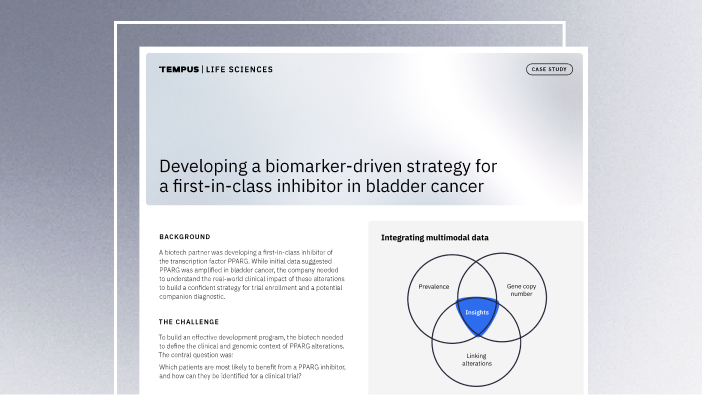
Biomarker strategy for an inhibitor in bladder cancer
Discover how Tempus’ multimodal data analysis helped a biotech partner identify a key biomarker in bladder cancer. This data-driven strategy de-risked clinical development and supported a successful $100 million financing round.
Read more -
 03/27/2026
Impact of M2-like macrophage infiltration on RCC immunotherapy outcomes
Tempus Lens analysis reveals how immune profiling enhances macrophage predictive value
Read more -
03/27/2026
Developing a gene expression signature for first-line treatment in metastatic CRC
Tempus RWD identifies a signature predictive of bevacizumab response in CRC
Read more